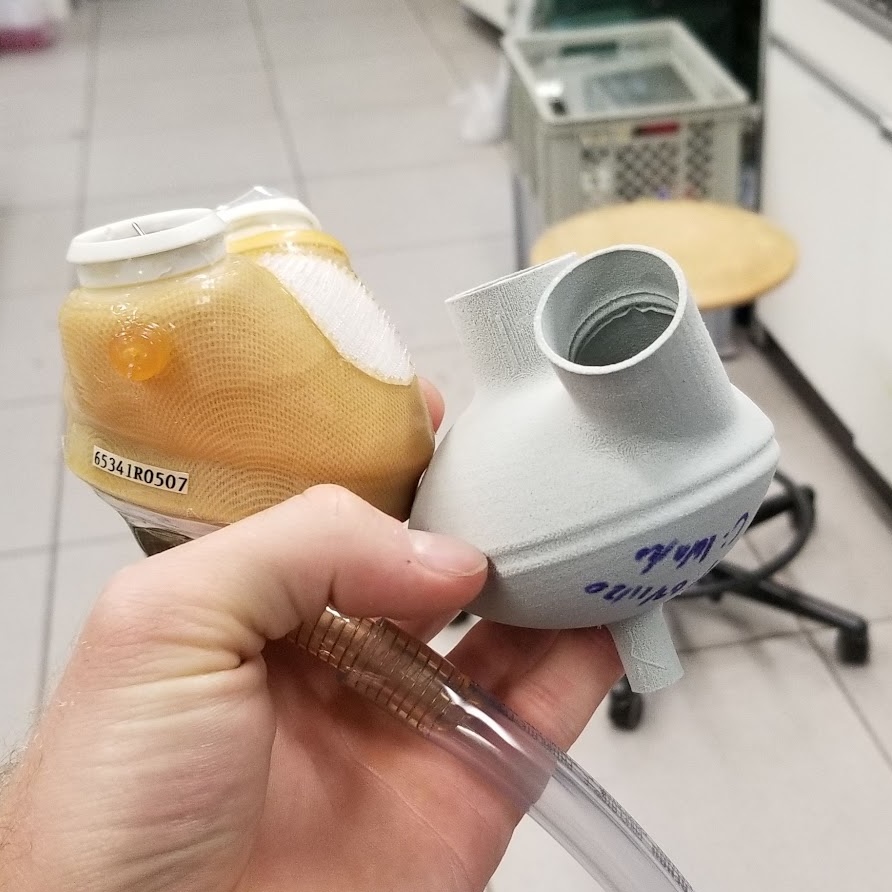
Soft Total Artificial Heart
A soft, sensorless, self-regulating total artificial heart
The Clinical Problem
End-stage heart failure requiring total cardiac replacement is currently treated using mechanical devices, such as pulsatile total artificial hearts (TAHs) or rotary assist systems. Existing TAHs, such as the SynCardia, operate at fixed settings and do not adapt well to the body’s changing oxygen demands. This is because the systems coordinate output between the left and right circulation by underfilling and operating at a fixed rate. This limits cardiac output and patient mobility. How can we enable adaptive cardiac output without adding sensing, control systems, or mechanical complexity?
The Approach
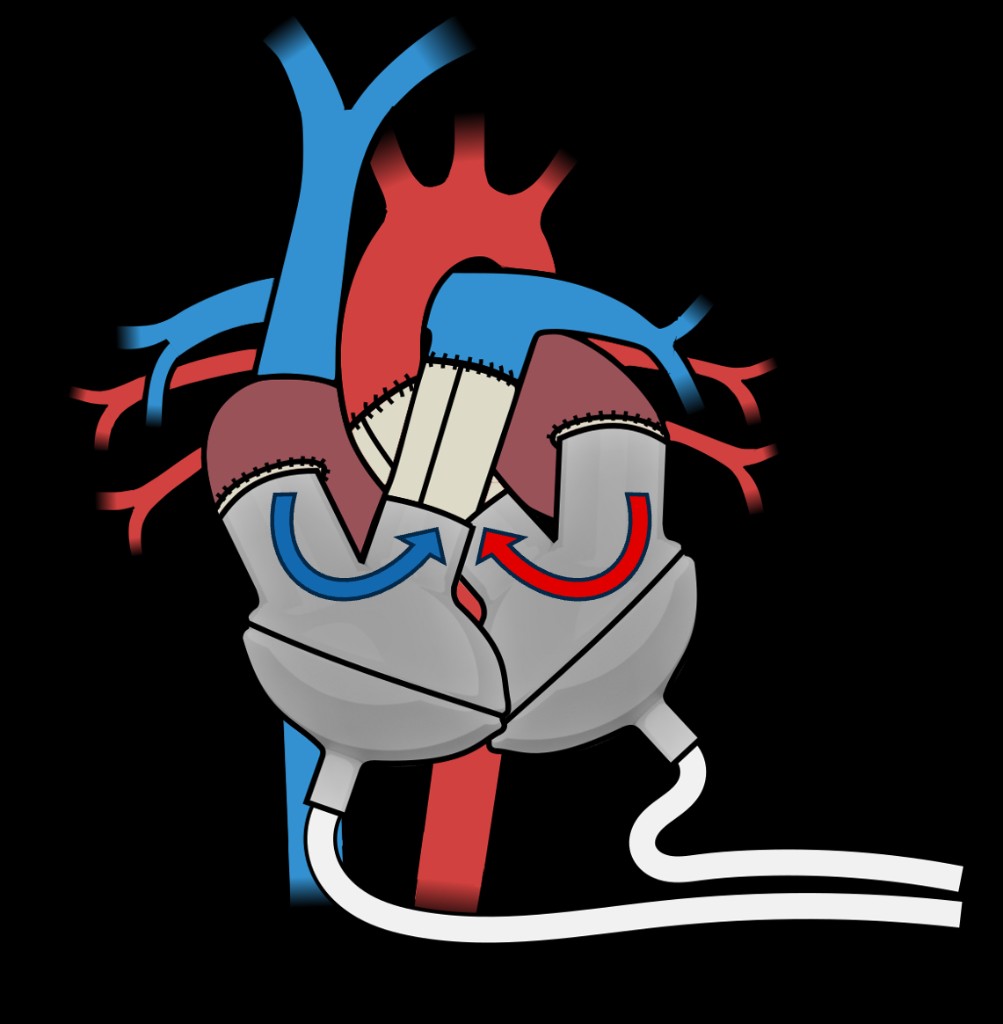
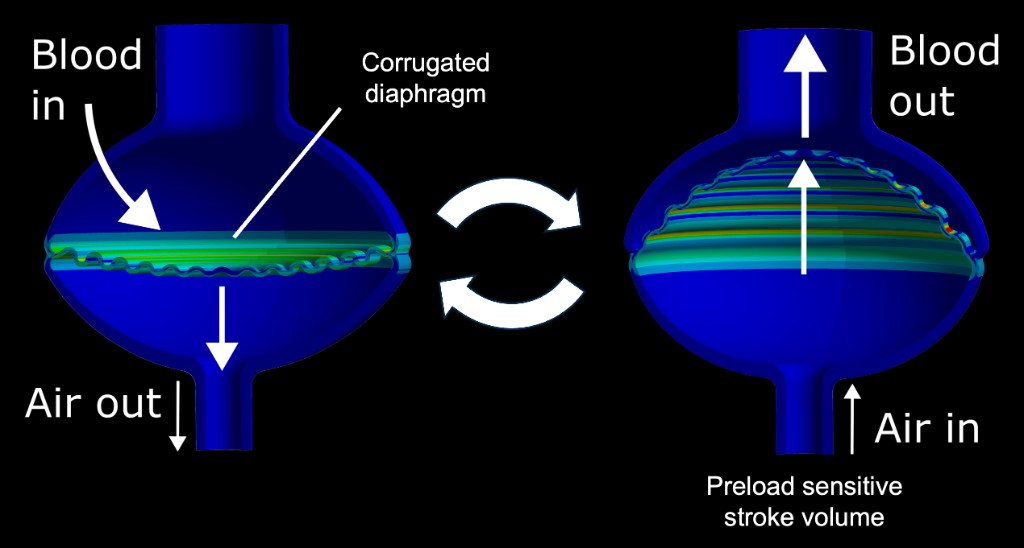
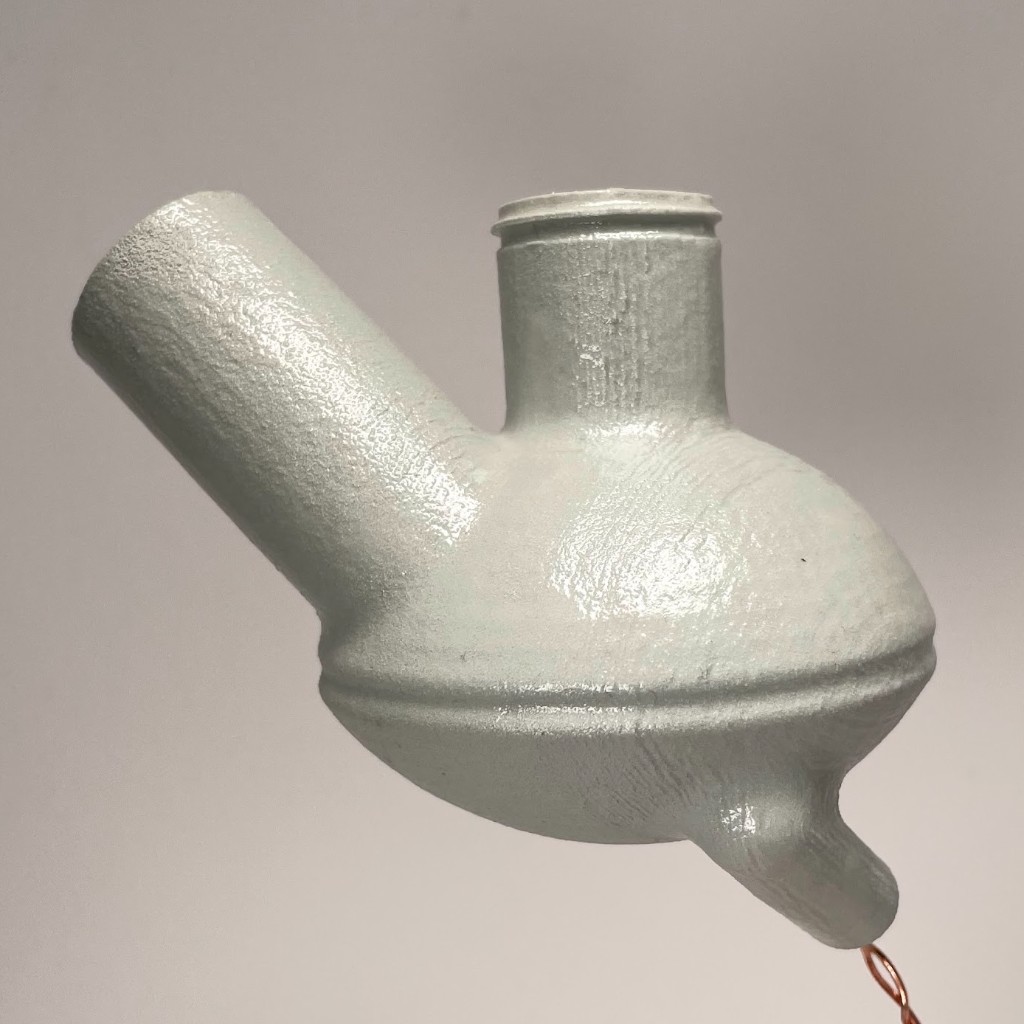
The key idea was to embed adaptation directly into the device. We designed a soft, elastomeric pump that passively adjusts its output based on filling conditions. By coupling preload (filling pressure) to stroke volume through the device geometry, the pump self-regulates output — increasing flow when more blood returns and decreasing it when less is available.
What We Built
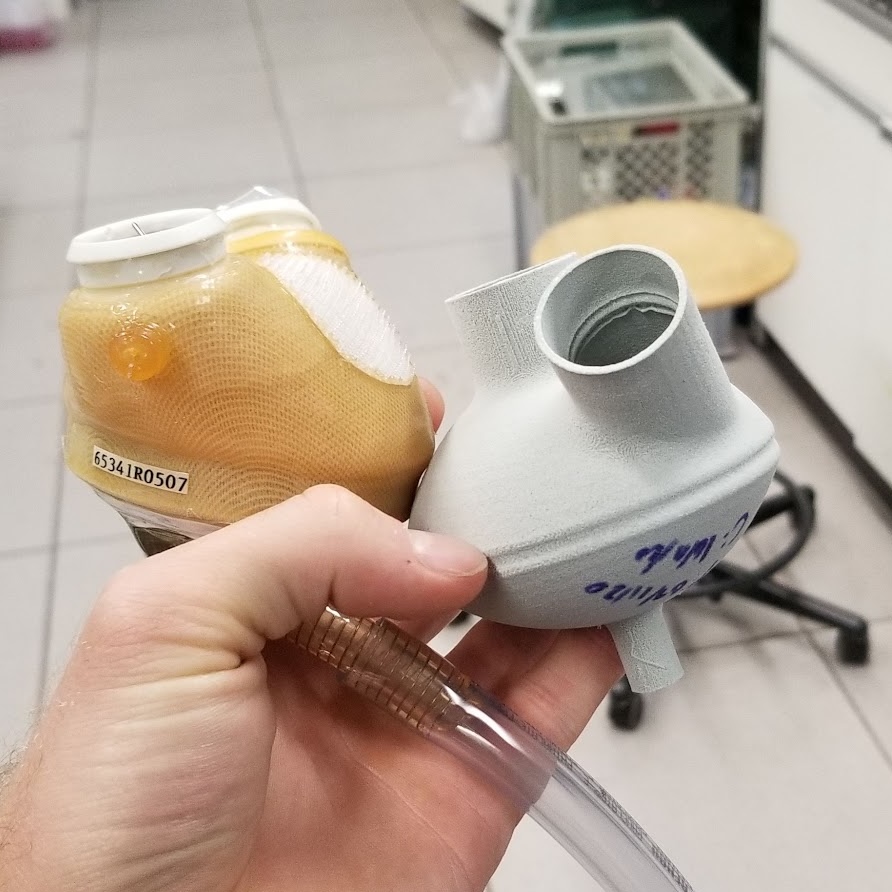
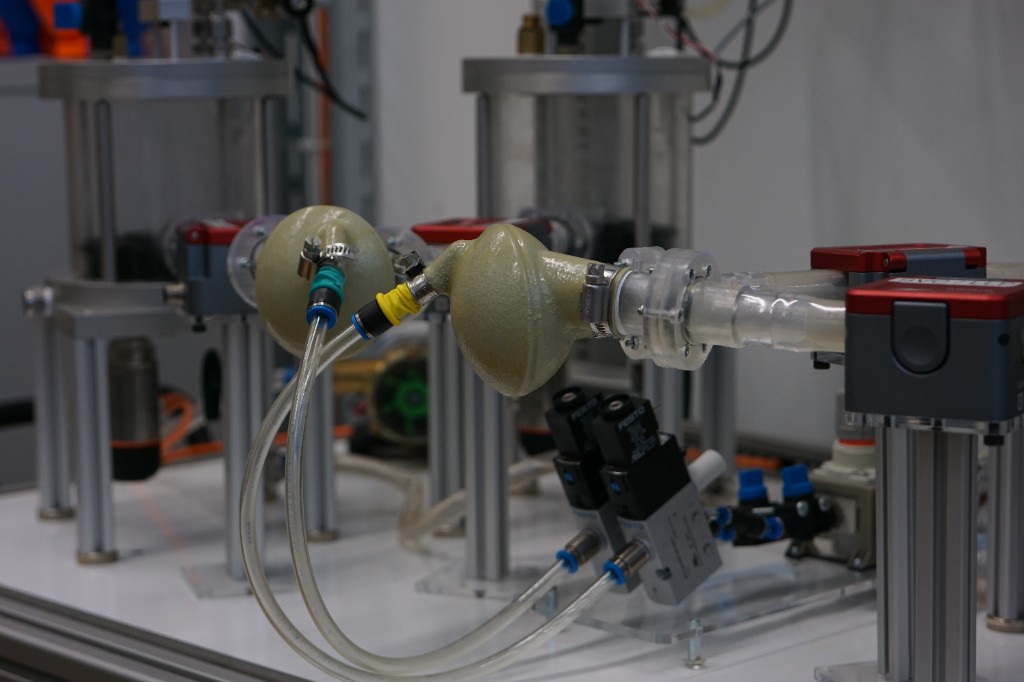
We developed a pneumatically actuated soft total artificial heart made entirely of elastomeric materials, featuring a biventricular architecture with a passive pressure-regulating geometry. The device was fabricated using 3D printing and evaluated in a mock circulation system, where we characterised haemodynamic performance and durability under physiological conditions.
My Role
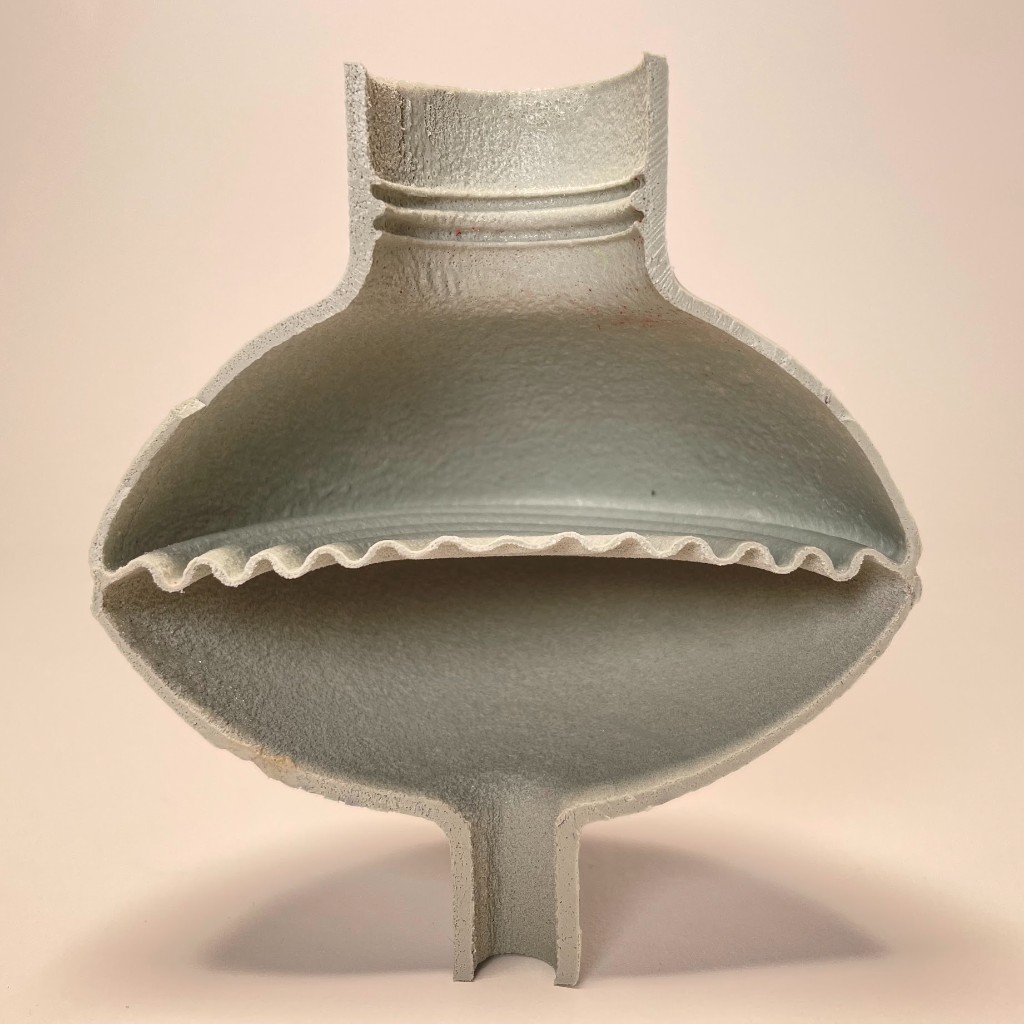
I led the conceptualization and mechanical design of the device, defining design requirements and making key design trade-offs, including FEA modelling, prototyping, and experimental validation. I built a rapid iteration workflow using SLS-based prototyping, enabling fast design–test cycles for soft pump geometries. I worked with clinicians to define technical requirements and iterated on implantability and handling based on their feedback.
Outcomes
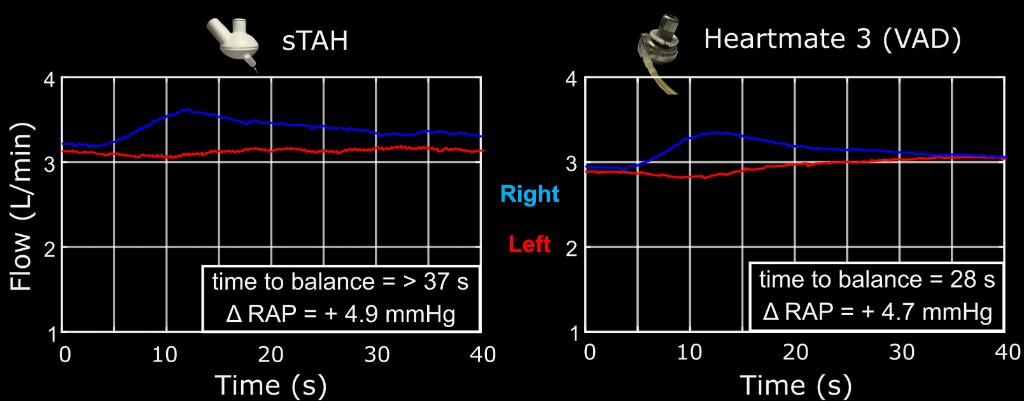
This work demonstrates a new approach to artificial heart control, in which adaptation is achieved through material and geometric properties rather than external control systems. We showed that the device can passively increase output in response to higher preload in a mock circulation system, demonstrating sensorless, physiologically relevant flow adaptation. More broadly, this approach has the potential to simplify device design, improve responsiveness, and support the development of next-generation soft cardiac devices.
Related publications
- First authorIncreased Longevity and Pumping Performance of an Injection Molded Soft Total Artificial HeartSoft Robotics · 2021
Related media

Soft Total Artificial Heart (thesis work)
Demo/recording related to the soft total artificial heart thesis work.