ML-Guided Design for Cancer Vaccines
Machine learning to accelerate the discovery of immunomodulatory polymer adjuvants
The Scientific Problem
Cancer vaccines require adjuvants to activate dendritic cells and drive antigen presentation, particularly by upregulating MHC molecules and co-stimulatory markers (e.g., CD40, CD80, CD86). These signals are necessary to initiate a robust adaptive immune response, but existing adjuvants are limited in both tunability and performance. Polymeric materials offer a promising alternative, as they can act as both delivery systems and immunomodulatory agents. However, the design space is vast, with millions of possible polymer combinations, making experimental discovery alone impractical.

The Approach
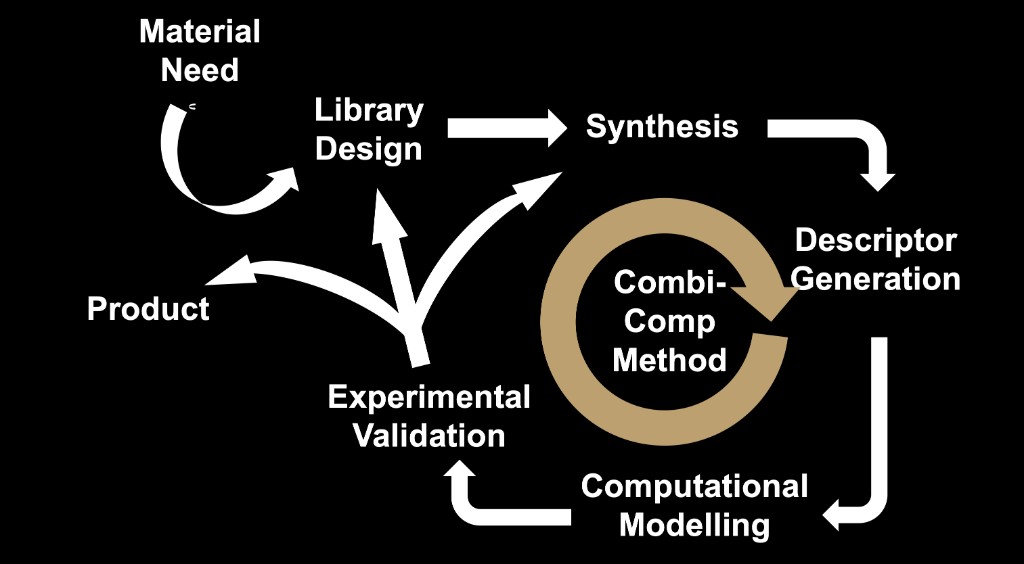
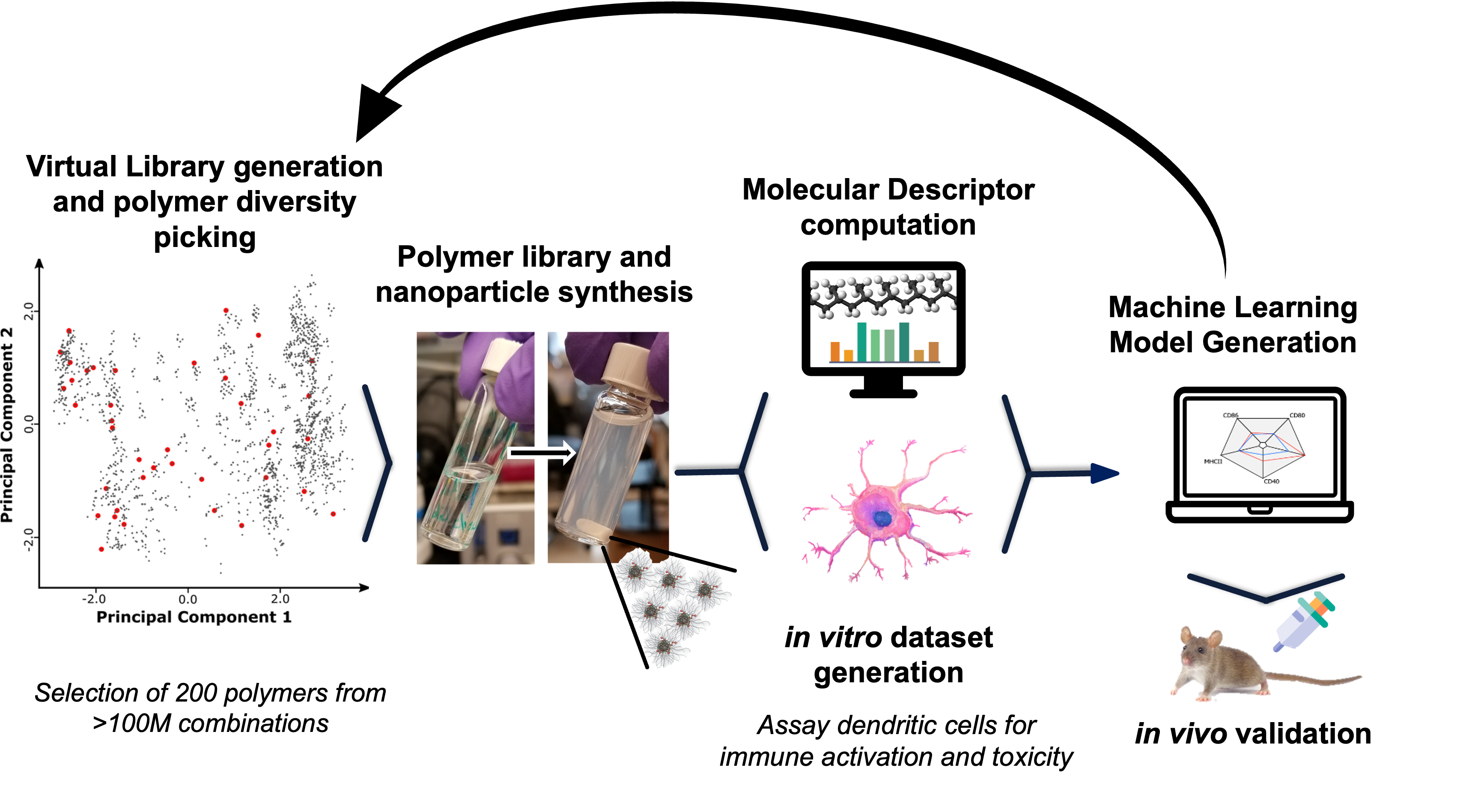
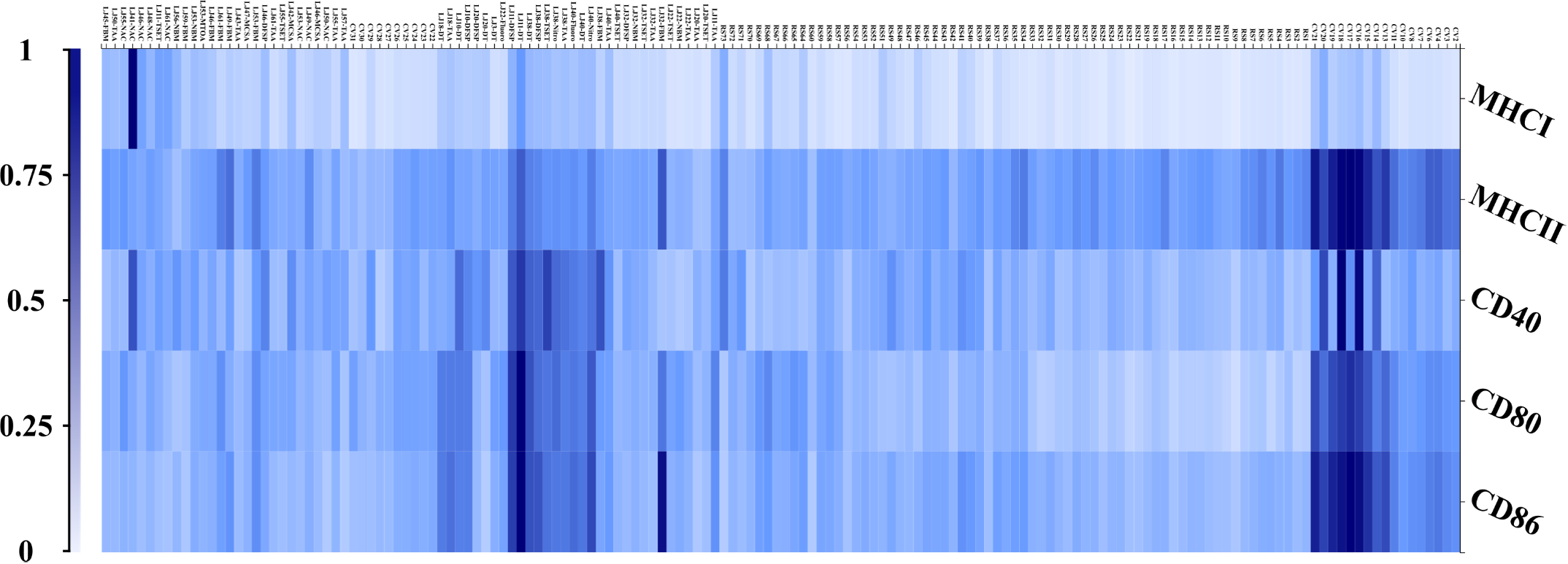
To overcome the vast polymer design space, we developed a machine learning–guided workflow to link polymer chemistry to immune activation. A library of 154 poly(β-thioesters) was synthesised and screened using dendritic cell assays to measure MHC I/II and co-stimulatory marker expression. This dataset was used to train predictive models, which were then applied to a much larger virtual chemical space (~110 million candidates) to prioritise promising polymers and guide experimental selection.
My Role
I worked across the full pipeline, from polymer design and synthesis to computational modelling. I built the polymer library, implemented the cheminformatics and machine learning workflow, and used this to guide candidate selection. This required integrating experimental and computational work, including polymer fabrication, data processing, model development, and interpretation of immunological results. I generated the data to support the patent filing.
Outcomes
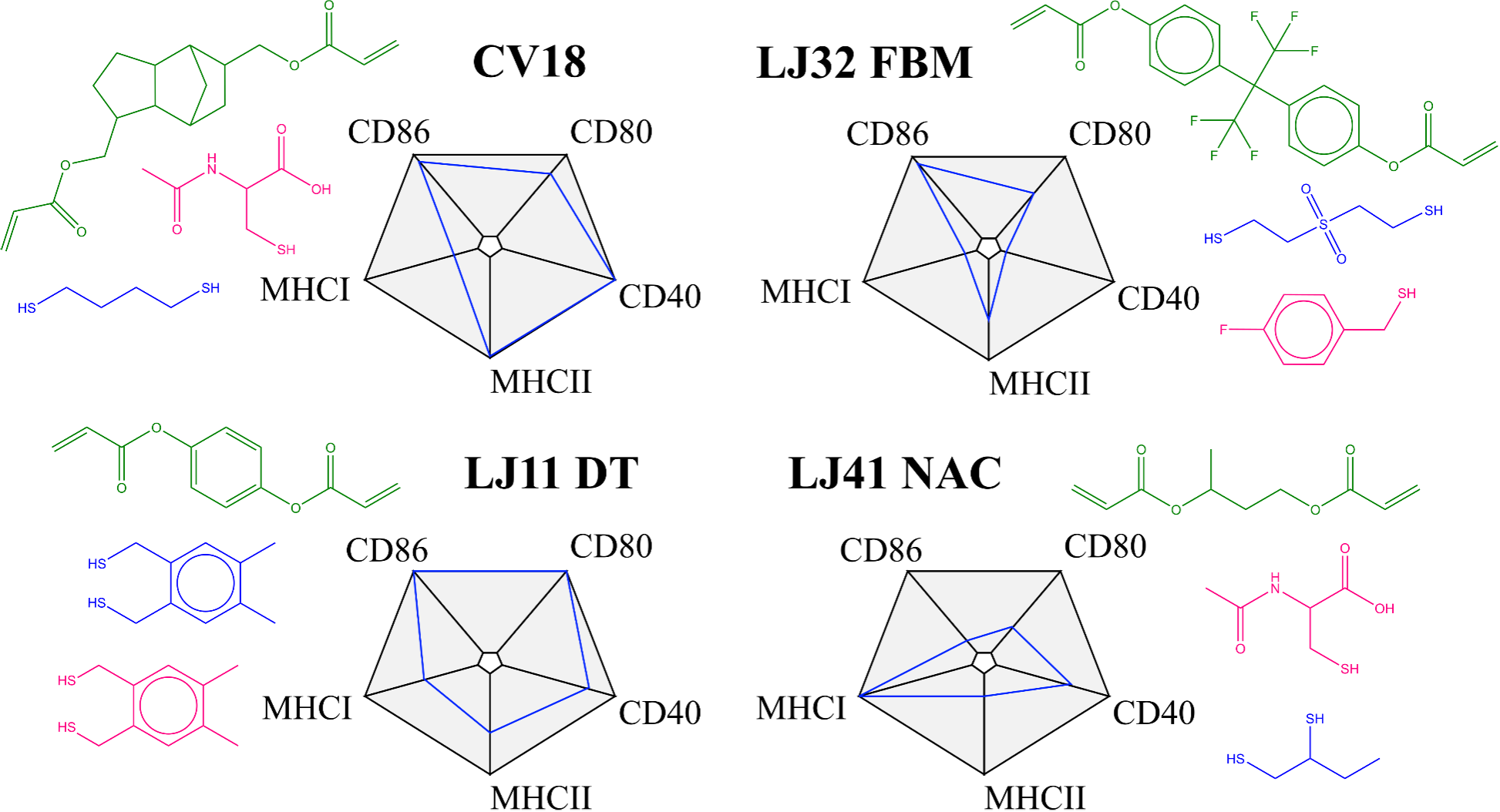
This work contributed to a patent on poly(β-thioester)-based immunomodulatory polymers for cancer vaccines. The approach identified candidate materials capable of significantly increasing immune activation, including up to ~13-fold increases in MHC I expression. More broadly, we showed how machine learning can be used to navigate large biomaterial design spaces and guide experimental discovery, reducing reliance on brute-force experimentation.
Related publications
- PatentPoly(Beta-Thioester) Polymers and Polymeric NanoparticlesUS Patent WO2021022185 · 2021
- First authorThesisMachine Learning to Design Cancer Vaccine AdjuvantsMSc Thesis — ETH Zurich / MIT · 2019
Related media

Biofabrication / polymer work (thesis work)
Recording related to biofabrication and polymer design thesis work.