
Torsionally Contracting Cardiac Tissues
Light-based method for creating aligned, contractile cardiac tissues
The Scientific Problem
The native heart is composed of cardiomyocytes aligned in multiple orientations across the ventricular wall, enabling coordinated, torsional contraction. This architecture is important for effective cardiac function, but difficult to reproduce in engineered tissues. Current approaches are typically limited to alignment in a single direction or require complex, time-consuming fabrication methods. The challenge was to create dense, functional cardiac tissues with multidirectional alignment using a simpler and more scalable process.
The Approach
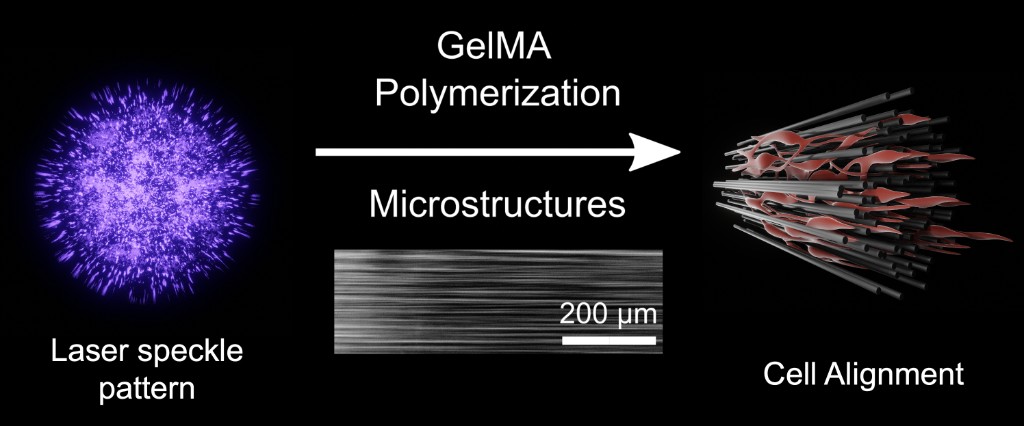
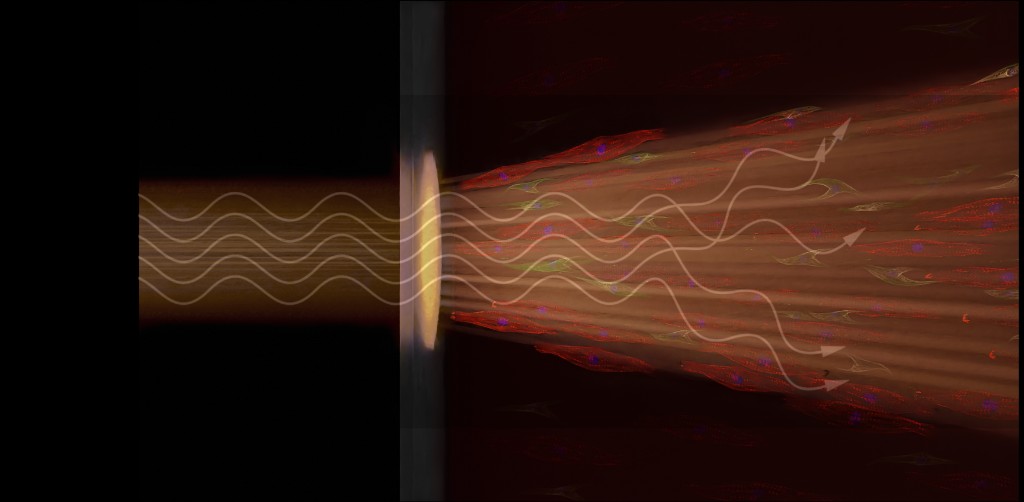
The key idea was to encode cell alignment using light. Instead of relying on patterned substrates or external templates, we used light microstructures (filamented light) projected from multiple directions to provide mechanical guidance cues for the cells. This enabled us to generate more complex, biomimetic alignment patterns within our engineered cardiac tissues.
What We Built
We demonstrated a light-based biofabrication method to align stem cell-derived cardiomyocytes in multiple directions within dense cardiac tissues. Using this approach, we created layered constructs with multidirectional alignment patterns. Furthermore, we demonstrated that these cell alignment patterns correlated with tissue contractility — specifically, we showed that tri-layered cardiac tissues could contract in a twisting motion, like the real heart.
My Role
I led the project from conception through to publication. I established cardiomyocyte culture protocols, developed hydrogel formulations, and engineered and characterised functional cardiac tissue constructs. I designed and ran experiments to assess tissue viability, organisation, and contractile behaviour, and wrote and managed the manuscript through peer review to publication.
Outcomes
This work resulted in a first-author publication in Advanced Science (2024) and established multidirectional FLight as a method for generating aligned, contractile cardiac tissues. We showed that this approach could produce tissues with twisting contraction and improved structural organisation compared with unstructured controls, providing a new route toward more biomimetic cardiac models for tissue engineering and disease research.
Related publications
- First authorMultidirectional Filamented Light Biofabrication Creates Aligned and Contractile Cardiac TissuesAdvanced Science · 2024
Related media
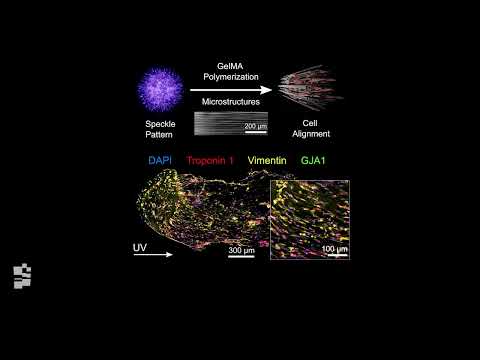
Multifilemented FLight video
Videographic paper summary or similar